You open the dishwasher after a full cycle and find a puddle of murky water sitting at the bottom. Nobody wants to come home to that, and it definitely shouldn’t be ignored. This guide walks you through every likely cause of a dishwasher not draining, what you can check yourself, and when it makes sense to call in a professional. 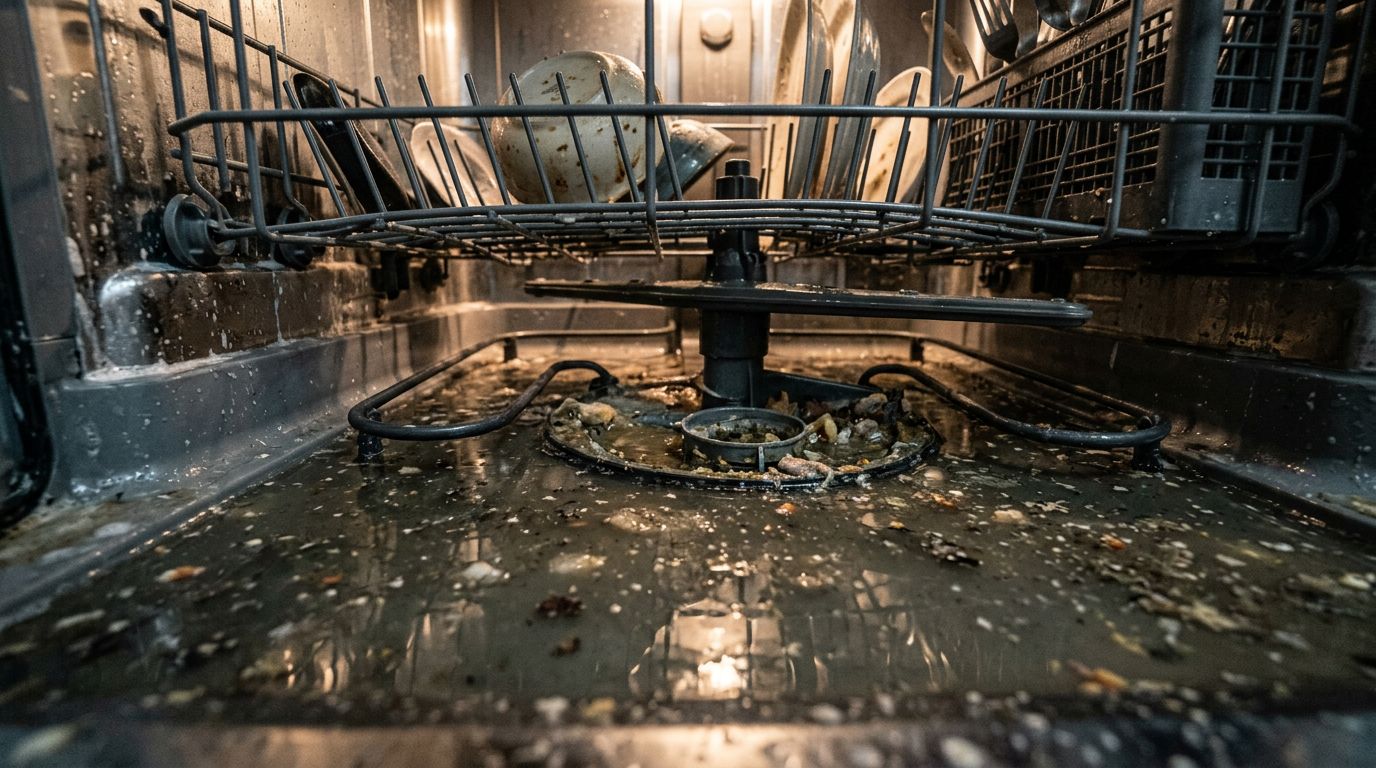 Rain, hard water, and the general wear that comes with Vancouver’s older housing stock all take a toll on home appliances over time. Dishwashers in particular tend to develop drain problems gradually. A slow buildup of grease, food debris, and mineral residue that eventually stops the water from going anywhere. At One Click Appliance Repair, we see this fairly often, and the good news is that most drainage problems start with something simple. A clogged filter. A kinked hose. A garbage disposal that hasn’t been run in a week. Before you book a repair call, it’s worth spending twenty minutes checking a few things yourself.
Key takeaways
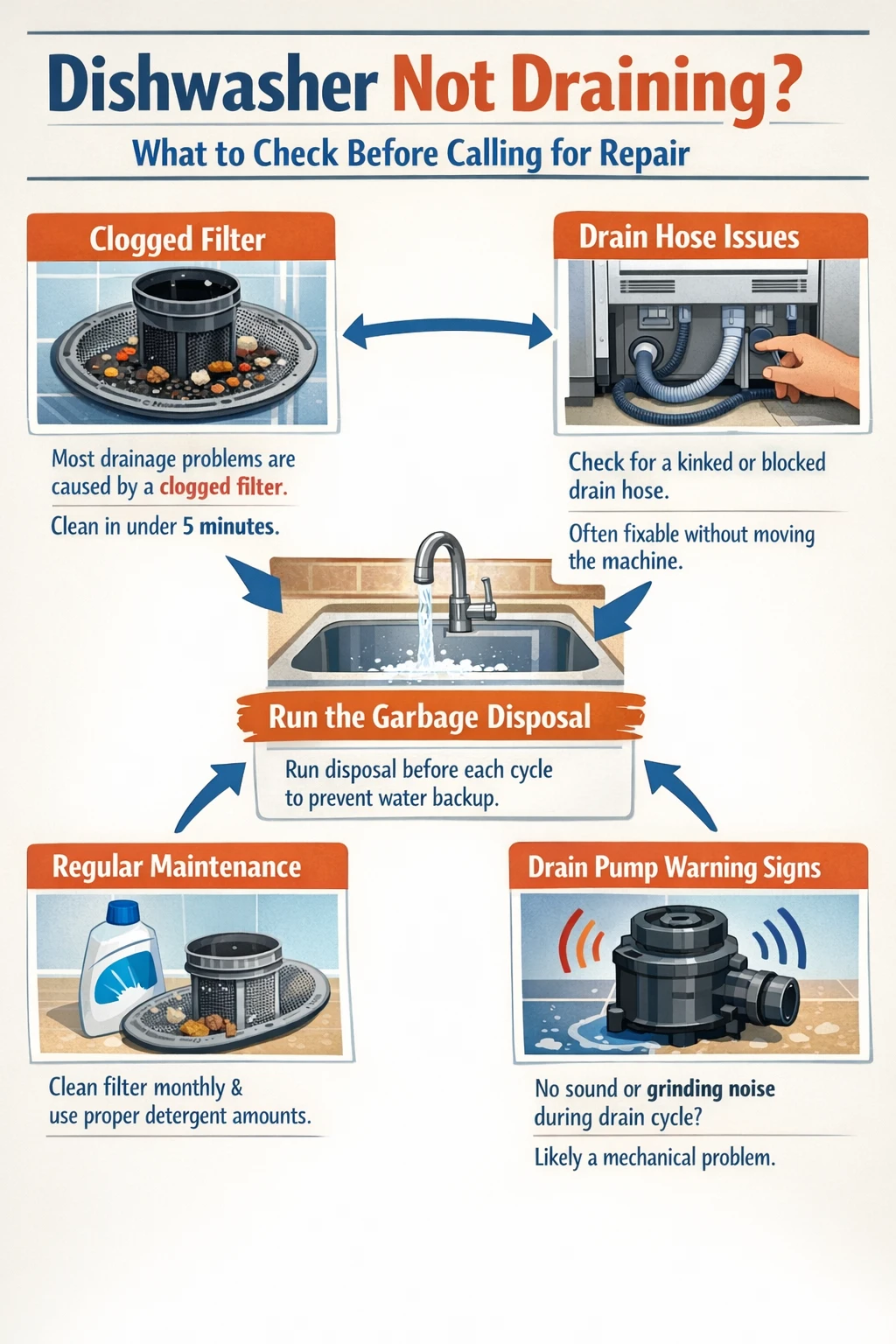
- The most common cause of a dishwasher not draining is a clogged filter, and cleaning it takes less than five minutes once you know where to look.
- A kinked or blocked drain hose is the second most frequent culprit, and in many cases it can be straightened or cleared without removing the machine.
- If your dishwasher connects to a garbage disposal, run the disposal before each cycle – food buildup there is a leading cause of water backing up into the dishwasher.
- Cleaning the dishwasher filter once a month can prevent most drainage problems before they start.
- Some dishwashers are designed to hold a small amount of water in the filter area between cycles – this is normal and not a sign of a clog.
- If the drain pump makes no sound during the drain cycle, or makes grinding noises, that points to a mechanical issue that needs a technician.
How your dishwasher drain system actually works
Most people don’t think about how their dishwasher drains until it stops doing it. The system is straightforward: a drain pump pushes water out through a corrugated drain hose, which connects to either your kitchen sink drain or garbage disposal. From there, waste water goes down the same drain as your sink. Some setups also include an air gap, a small chrome or plastic cylinder mounted on the countertop near the faucet, that prevents dirty water from siphoning back into the machine. When any part of that chain gets blocked, water has nowhere to go. The pump runs, but the water just sits there. In some cases the machine detects the problem and stops the cycle mid-way, which can make it look like the dishwasher is malfunctioning when it’s actually doing its job of preventing overflow. Understanding this chain is useful because it tells you where to look. You start at the inside of the machine and work your way out toward the sink drain.
Start here: the filter and the drain area
The filter is the most likely reason your dishwasher is leaving standing water. It sits at the bottom of the tub, usually near the base of the lower spray arm, and it catches food particles, grease, and debris during every cycle. Over time, especially if you’re loading dishes without scraping them first, that filter gets packed with gunk and water simply can’t push through. Remove the bottom rack and you’ll see it. Most filters twist out counterclockwise by hand. Some have a flat cage or grille you’ll need to lift off first. Pull the filter out and hold it under warm running water. If it’s visibly clogged, you’ll know immediately – there will be food particles matted into the mesh. Use a soft brush (an old toothbrush works perfectly) to scrub off any stuck-on debris. Do not use anything abrasive or you can damage the fine mesh. 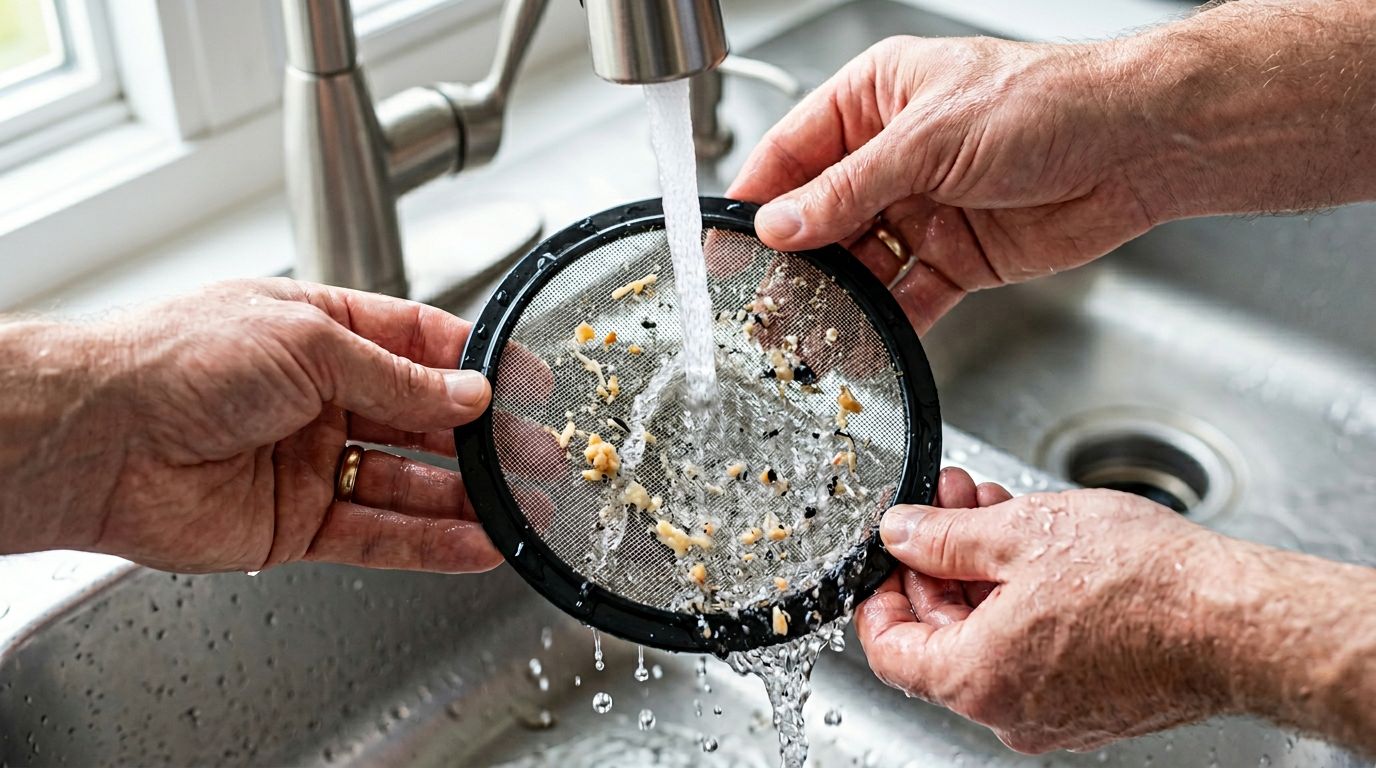 While the filter is out, look down into the drain area with a flashlight. You’re checking for anything that shouldn’t be there – broken glass, a stray piece of bone, a utensil that fell through. We see this more than you’d think. One small piece of broken glass can jam the drain pump impeller just as effectively as a full clog. A thin shard that made it through the filter and lodged itself in the pump area will stop drainage completely, and it’s easy to miss. Fish out anything you spot before reinstalling the filter.
What’s normal vs. what’s a problem
One thing worth knowing: some dishwashers are designed to retain a small amount of water in the filter area between cycles. This keeps the seals from drying out. If you see a shallow pool of water just in the filter zone but the rest of the tub bottom is dry after a full cycle, check your owner’s manual before assuming there’s a problem. Models with an ultra-fine filter typically behave this way. If water is covering the entire bottom of the tub, that’s a drainage issue.
Check the drain hose and the connection under the sink
If cleaning the filter doesn’t solve it, the next place to look is the drain hose. This is the corrugated tube that runs from the dishwasher, usually behind or under the machine, up under the sink cabinet, and into either the sink drain or the garbage disposal inlet. Kinks are surprisingly common. The hose gets bent during installation, or someone pushes a box of dish soap against it under the sink and forgets about it. Even a partial kink can slow drainage enough to leave an inch of water in the tub. Pull everything out from under the sink and look at the full length of the hose. If you find a bend, gently straighten it out. The connection point where the hose meets the disposal or drain is also worth inspecting. The hose should be clamped securely and shouldn’t have visible cracks or splits. A loose connection can allow water to drain slowly or not at all. One thing that catches people off guard: if you recently had a new garbage disposal installed, there’s a plastic knockout plug inside the disposal’s dishwasher inlet that has to be removed. If the installer forgot that step, the dishwasher has nowhere to drain. This happens. One family on Reddit replaced their entire dishwasher trying to solve a drainage problem, only to discover after the fact that the knockout plug in the new disposal had never been removed. A five-minute fix that cost them an appliance.
The high loop and why it matters
If your setup doesn’t use an air gap, the drain hose needs to be looped up high under the counter before it comes back down to the disposal or drain connection. This “high loop” prevents dirty sink water from flowing back into the dishwasher when the drain is in use. If the hose runs flat or slopes downward the whole way, you may get back-flow that mimics a drainage problem. The U.S. Department of Energy and most appliance manufacturers recommend checking your installation manual for the correct hose height requirement, which varies by model.
The garbage disposal connection
If your dishwasher drains through a garbage disposal, the disposal’s condition directly affects how well the dishwasher drains. Food waste sitting in the disposal can back up into the dishwasher drain line. It’s a simple fix: run the disposal with cold water for about 30 seconds before you start a dishwasher cycle. Make this a habit and you’ll avoid a fair number of drainage complaints. 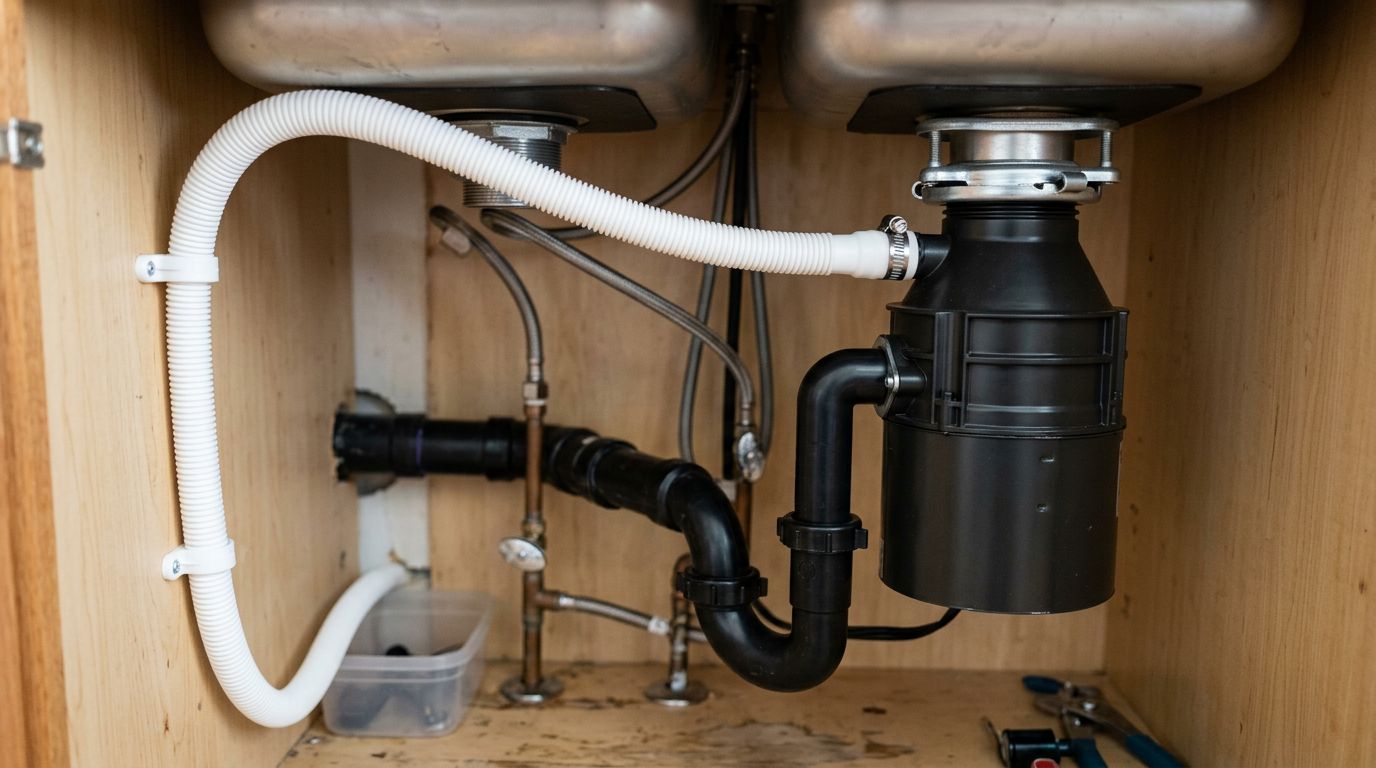 If running the disposal doesn’t clear things up, fill the sink with a few inches of water and then flip the disposal switch two or three times while the sink drains. Some people report hearing an audible “pop” or air release when a partial blockage clears. It sounds odd but it works. We get calls from homeowners in Kitsilano and Mount Pleasant fairly regularly about this exact issue – older homes, older plumbing configurations, disposals that don’t get used every day. The fix is usually just running the disposal and establishing a pre-wash routine.
The air gap – small device, big impact
Not every home has one, but if yours does, it’s worth knowing about. The air gap is that chrome or plastic cap mounted at the back of your sink, usually next to the faucet. It’s part of the drain path, and it can clog with debris over time. If water is spraying out of the air gap while the dishwasher runs, that’s telling you there’s a blockage between the air gap and the disposal. The gap itself is straightforward to clean: pop the cap off, look inside, and use a small brush or piece of wire to clear any buildup. Rice, grease, and food debris are common culprits. One person found a piece of chicken bone that fit the opening so precisely it may as well have been custom made. Clean the inside with a mix of baking soda and water if there’s residue, then reattach the cap and run a test cycle.
When it’s the drain pump
If you’ve worked through everything above and the dishwasher still won’t drain water, the problem is likely the drain pump itself. The pump is a motor-driven component that physically pushes water through the drain hose. When it fails, or when something gets lodged in the impeller that it can’t eject, water stays in the tub. Here’s a useful diagnostic: run a cancel or drain-only cycle and listen. You should hear a buzz or whirring sound from the pump area at the bottom of the machine. If you hear nothing, the pump may not be receiving power or may have failed. If you hear a hum but no draining happens, the impeller is likely jammed by debris that made it past the filter. Some confident DIYers do replace dishwasher drain pumps themselves – on an LG, for example, replacement pump parts can run around $40 – but it requires pulling the machine out, disconnecting water lines, and working with electrical connections. If you’re not comfortable with that, or if you’re not sure whether the pump is actually the problem, that’s the right moment to call a technician. Dishwasher repair in Vancouver is straightforward for a professional, and misdiagnosing the pump when the real issue is the hose connection is an expensive mistake to make. Homes in areas like Burnaby and the East Side with older drainage systems occasionally show a third scenario worth mentioning: a slow or partially blocked main drain line. If your kitchen sink is also draining slowly, or if multiple drains in the house seem sluggish, the dishwasher may be the messenger rather than the problem. Tree roots, grease buildup in older cast iron pipes, and debris accumulation can back up into appliances. That’s plumber territory, not appliance repair.
Preventing drainage problems going forward
Most of what causes a dishwasher not draining is preventable with a few consistent habits. Scrape large food pieces into the trash before loading. You don’t need to rinse dishes spotless, but bones, pasta, and chunks of food that reach the filter in quantity are the main reason filters clog. Run the garbage disposal for 30 seconds before starting a cycle. Clean the filter once a month – it takes less time than making a cup of coffee. Run a cleaning cycle monthly using a dishwasher cleaning tablet or a cup of white vinegar placed in the bottom of an empty machine. This breaks down grease and soap film before it accumulates enough to restrict drainage. Check the drain hose once a year. Give it a visual inspection for kinks, cracks, or buildup at the connection points. An old drain hose with years of residue on the inside walls can restrict flow even without a visible clog. The Maytag owner’s care guidance and similar manufacturer documentation generally recommend replacing drain hoses that show visible cracking or stiffness, rather than trying to flush them out. Also worth knowing: using too much detergent, or the wrong type, can cause over-sudsing that interferes with drainage. Stick with detergents recommended in your machine’s manual, and measure rather than guessing.
Frequently asked questions
Drainage is one of the most common dishwasher complaints we encounter, and a lot of the same questions come up. Here are the ones worth knowing.
Is it normal to have a little water at the bottom of the dishwasher?
Yes, in many models a small amount of water in the filter area is intentional. It keeps the seals from drying out between uses. The key is location and volume – water sitting only in the recessed filter zone is usually normal, while water covering the full bottom of the tub after a complete cycle is a sign of a drainage problem. Check your owner’s manual to be certain, since it varies by brand and model.
Why does my dishwasher drain into my sink when it runs?
If you see water backing up into the sink while the dishwasher is draining, the most common explanation is a blockage in the shared drain line – usually in the garbage disposal or the drain connection itself. Running the disposal before the cycle often prevents this. If it keeps happening after clearing the disposal, the issue may be a partial clog further down the drain line, which would show up as slow draining across the sink as well.
Can I use baking soda and vinegar to unclog my dishwasher drain?
It can help with light grease buildup and minor clogs. Pour one cup of baking soda into the bottom of the empty dishwasher, follow it with one cup of white vinegar, let the mixture sit for 15 to 20 minutes, then run a hot rinse cycle. It won’t break up a solid obstruction like a piece of glass or bone, but it’s a reasonable first step for slow drainage caused by soap scum or grease accumulation. The Bosch support documentation also recommends regular cleaning cycles using a dishwasher descaler for machines in areas with hard water, which is worth noting for anyone in Greater Vancouver where mineral content can be higher.
What does it mean if my dishwasher hums but won’t drain?
A humming sound during the drain cycle usually means the pump motor is running but the impeller is blocked. Something, often a small piece of broken glass, a seed, or a bone fragment, has made it past the filter and is jamming the impeller blades. In some cases you can access the pump area by removing the filter assembly and carefully checking below it. If you can see and safely remove the obstruction, that may solve it. If not, this is a repair call.
Should I run my dishwasher if it has standing water?
Running another cycle with standing water already in the machine risks overflow if the drain is completely blocked. The safer move is to manually remove the water first – use a cup to scoop most of it out, then towels or a wet/dry shop vac to get the rest – and then diagnose the cause before running another cycle. If the issue turns out to be a partially cleared clog, running the cancel or drain-only cycle after manual removal can help confirm whether the pump is working.
Wrapping up
Most cases of a dishwasher not draining come down to one of three things: a clogged filter, a kinked or blocked drain hose, or a garbage disposal that needs attention. Check those first, in that order, and you’ll resolve the problem the majority of the time without spending a cent. Monthly filter cleaning and the habit of running the disposal before each cycle will prevent most of these issues from showing up in the first place. If you’ve worked through all of that and the dishwasher still won’t drain, or if you’re hearing unusual sounds from the pump area, it’s worth getting a professional opinion before the problem gets worse. At One Click Appliance Repair, we handle dishwasher repair across Vancouver and the surrounding area – along with washer repair, fridge repair, stove repair, and most other home appliances. Give us a call and we’ll help you figure out what’s actually going on and what it will take to fix it.