You open the fridge, reach for the milk, and it’s warm. Nobody wants to come home to that. This guide walks you through the most common reasons a refrigerator stops cooling and exactly what to check before you pick up the phone.
A fridge that won’t cool is one of those problems that feels urgent right away, because it is. You’ve got food on the clock. In Vancouver, where we deal with everything from damp winters to warmer summer stretches, refrigerators work hard year-round. The good news is that not every cooling problem means a costly repair or a new appliance. At One Click Appliance Repair, we get these calls regularly, and a surprising number of them turn out to have straightforward causes that a homeowner can identify, and sometimes fix, without any special tools.
That said, some problems do require a professional. Knowing the difference saves you time, stress, and the cost of parts you don’t need. So let’s start from the top and work through it systematically.
Key takeaways
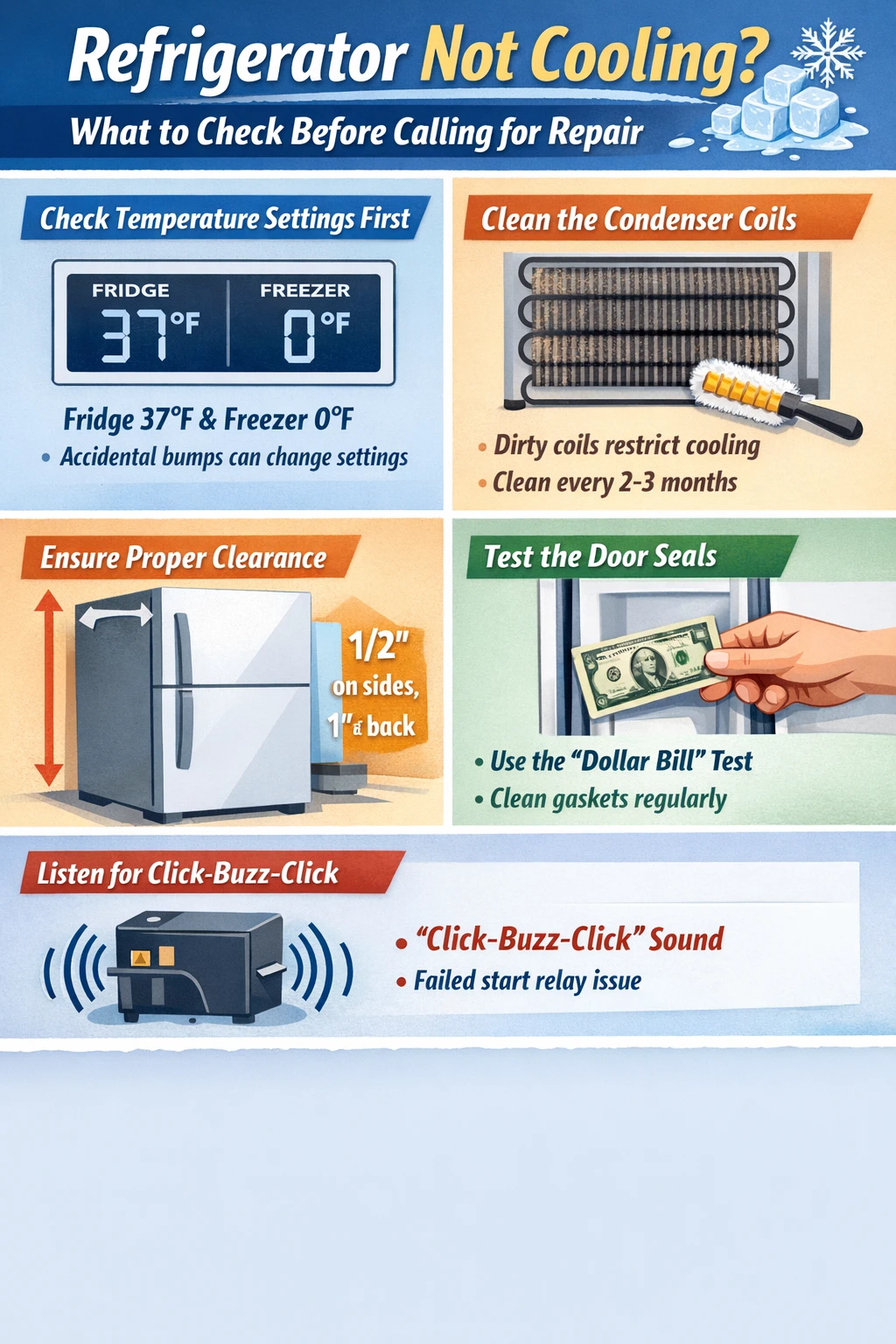
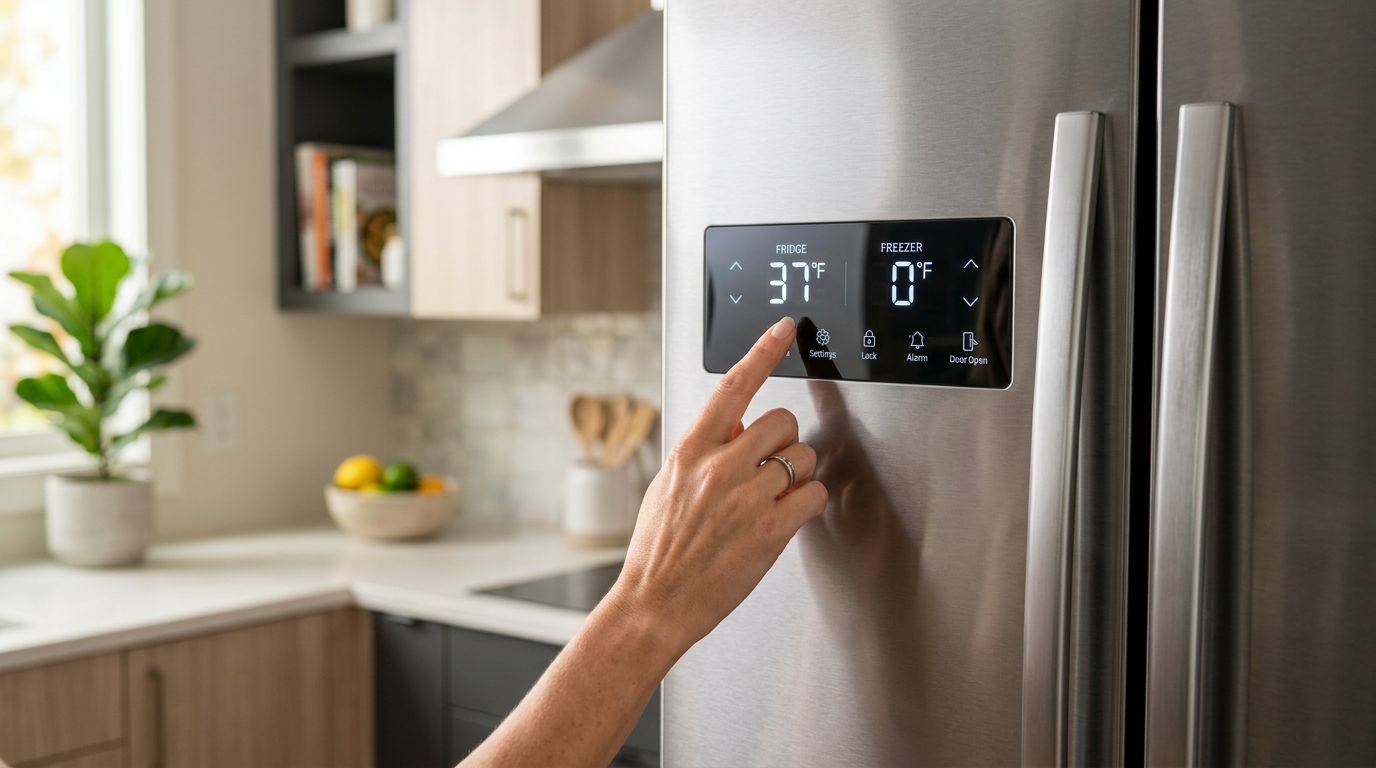
- The ideal refrigerator temperature is around 37 degrees Fahrenheit, with the freezer set to 0 degrees Fahrenheit. If those settings got bumped accidentally, that’s your first check.
- Dirty condenser coils are one of the most common and most preventable causes of cooling failure. Cleaning them every 2 to 3 months (more often in dusty or pet-heavy homes) can prevent the problem entirely.
- A refrigerator needs at least half an inch of clearance on the sides and one inch at the back for proper airflow. Less than that and the unit struggles to shed heat.
- If ice has built up on the back wall of the freezer compartment, the defrost system has likely failed. Unplugging the fridge for 24 to 48 hours to manually defrost it will confirm whether that’s the problem.
- A closed refrigerator keeps food safe for roughly 4 hours. A full freezer holds temperature for about 48 hours. Keeping the doors shut buys you time while you troubleshoot.
- If you hear a repeating click-buzz-click pattern from the back of the fridge, the compressor start relay may have failed. It’s a relatively inexpensive part and a common fix.
What’s actually happening when a refrigerator stops cooling
Most of the time, a fridge that isn’t cooling is running fine mechanically. The compressor hums, the lights work, nothing sounds alarming. The problem is usually somewhere in the chain between ‘compressor runs’ and ‘cold air reaches your food.’ That chain has several links, and any one of them can break down.
The cooling process works like this: the compressor pressurizes refrigerant, which flows through the condenser coils and releases heat. That cooled refrigerant then moves to the evaporator coils inside the freezer compartment, where a fan circulates cold air through both the freezer and the refrigerator section. If anything blocks or interrupts that flow, temperatures climb. In our experience, the failure points most homeowners can actually check themselves are the condenser coils, the door seals, the air vents, and the temperature settings.
The issues that require a technician are internal ones: a failed evaporator fan motor, a broken defrost heater, a bad compressor start relay, or a refrigerant leak. You can often identify which category you’re in without opening a single panel.
Start here: the easy checks that solve more problems than you’d think
Before anything else, confirm the fridge has power and that the thermostat hasn’t been accidentally bumped. It sounds obvious, but it happens more often than people admit. Kids lean against the control panel, a bag of groceries nudges the dial. The refrigerator should be set to 37 degrees Fahrenheit, and the freezer to 0 degrees Fahrenheit. On models with electronic displays, check whether the unit is in ‘demo’ or ‘showroom’ mode. Samsung refrigerators are particularly prone to this. In demo mode, the display and lights work normally but the compressor doesn’t run. The fix is just a settings change.
Next, pull the fridge away from the wall slightly and check the clearances. It needs at least half an inch on the sides and one inch at the back. Cramming a refrigerator into a tight cabinet space is a common issue we see in older Kitsilano and East Vancouver homes where kitchen layouts weren’t designed for modern appliance sizes. Without that clearance, heat can’t escape, and the compressor runs hot without ever getting the unit cold enough.
Also check whether the fridge is level. An unlevel installation affects how the doors seal and can cause temperature fluctuations over time. Set a level on top of the unit, front-to-back and side-to-side. If it’s off, the front legs can usually be adjusted by hand.
The condenser coils: the most overlooked maintenance task
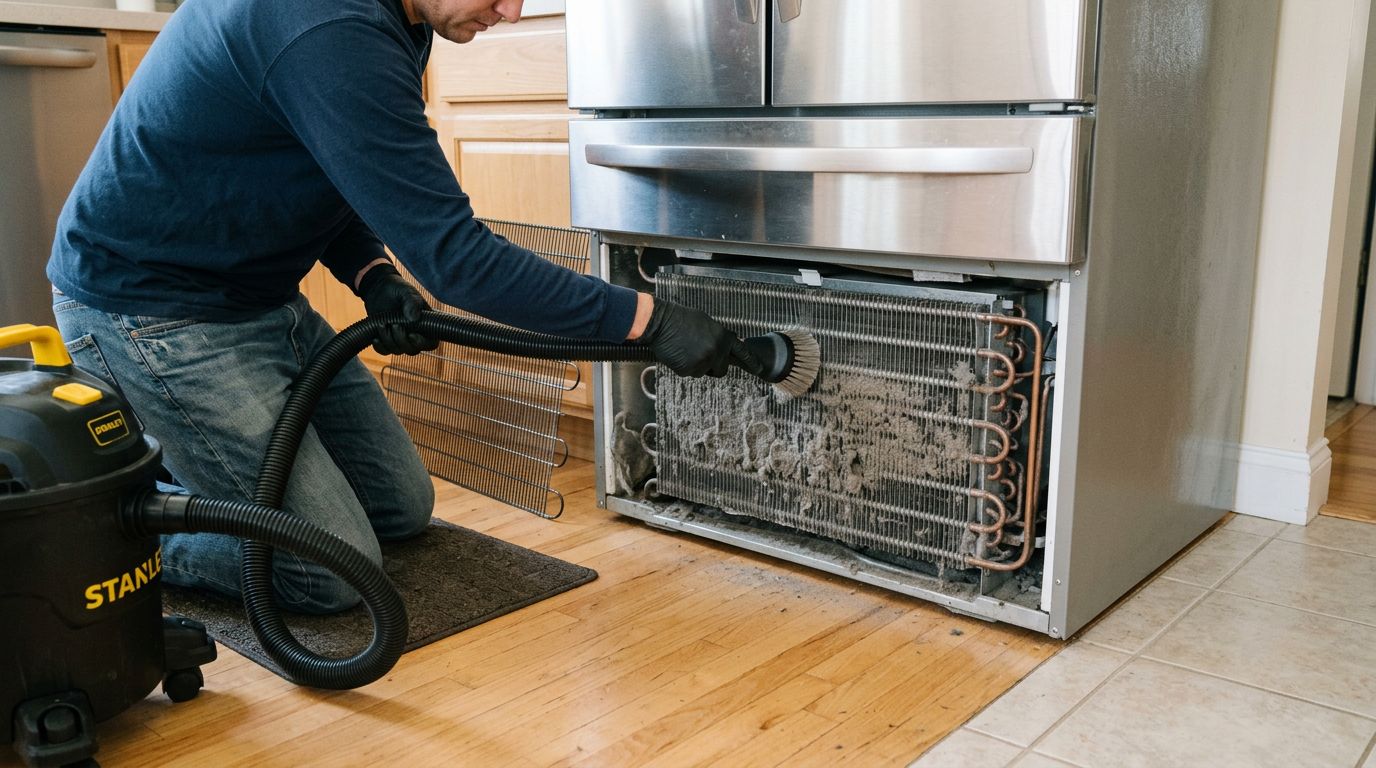
Here’s a maintenance job that most people have never done and that fixes a remarkable number of cooling complaints. The condenser coils are what allow the refrigerator to release heat. When they’re coated in dust, pet hair, and lint, the compressor can’t shed heat efficiently. The unit runs constantly but can’t get cold enough. It’s a bit like trying to cool down while wearing a winter coat indoors.
On older refrigerators, the condenser is usually mounted underneath, accessible by removing the kick plate at the front bottom. On newer models, it’s typically at the back, behind a compressor compartment cover. Unplug the refrigerator first. Then use a vacuum with a brush attachment or a long condenser coil brush to clean out the buildup. You may need to work from both the front and the back to get everything.
If your home has pets or a dusty environment, clean the coils every two to three months. In a normal household, once or twice a year is usually enough. According to the U.S. Department of Energy, keeping condenser coils clean is one of the most effective ways to maintain refrigerator efficiency and extend appliance life. This single step genuinely solves more fridge cooling problems than any other DIY fix.
Door seals: a slow leak you might not notice
The door gaskets are the rubber seals running around the inside edge of the fridge and freezer doors. Their job is simple: keep cold air in and warm air out. When they fail, the compressor works harder and harder trying to compensate, and eventually can’t keep up.
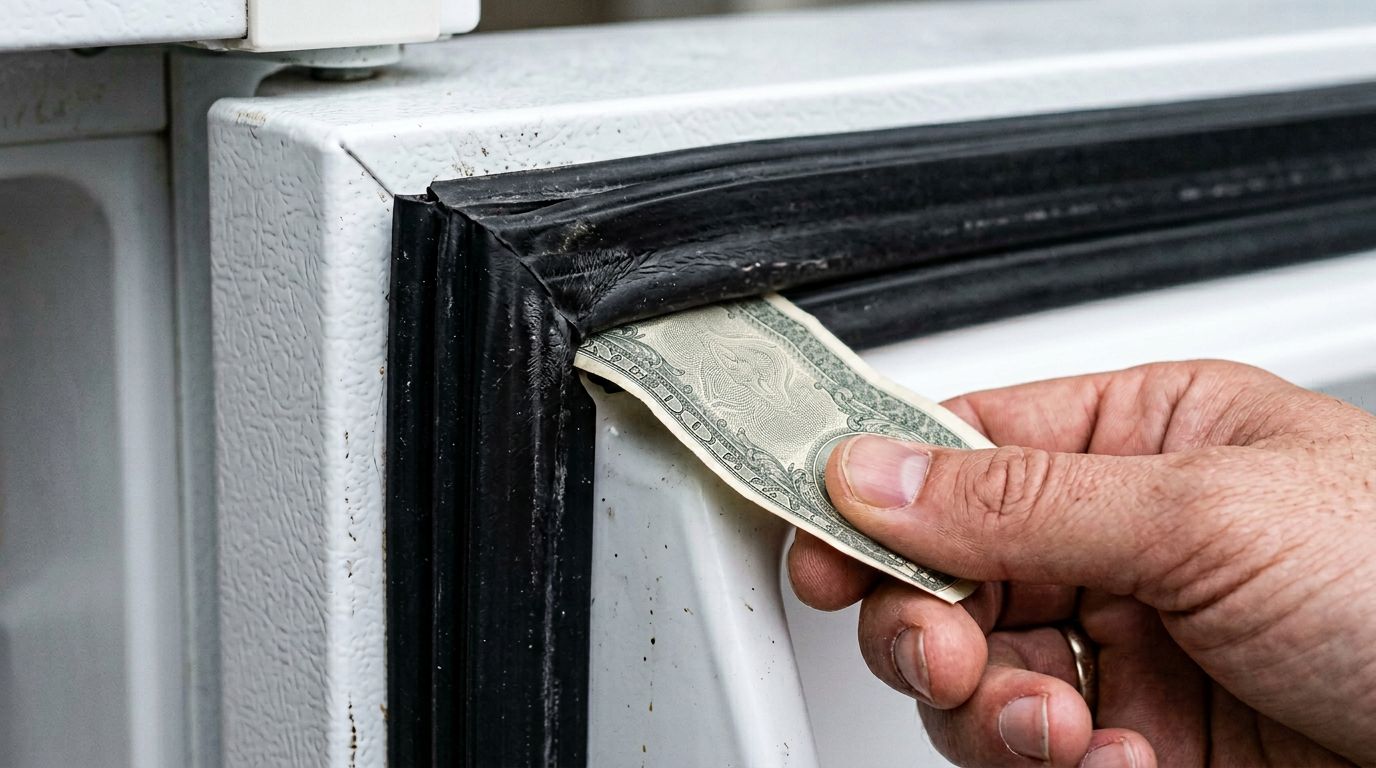
Testing a door seal is easy. Close the door on a dollar bill. Pull it. You should feel real resistance. If the bill slides out with no effort, or drops to the floor, the seal isn’t making good contact. Do this at several points around the door, not just at one spot.
Dirty gaskets are often the culprit before worn ones. Food residue, grease, and crumbs prevent a proper seal. Clean the gaskets with warm soapy water and a soft cloth, getting into the folds. After cleaning, test again with the dollar bill. If the seal is still loose, or if you can see cracks or tears in the rubber, the gasket needs replacing. That’s a repair worth doing, and usually not an expensive one. If the fridge not cold enough problem persists after you’ve cleaned the seals, move on to the next steps.
Blocked air vents and ice buildup inside the freezer
Air vents inside the fridge and freezer allow cold air to circulate between compartments. Overpacking the refrigerator is a real problem. A freezer jammed with bags and containers can block the vents so thoroughly that the refrigerator section barely cools at all, even though the freezer seems fine. Rearranging food to keep vents clear often solves a ‘fridge warm, freezer okay’ situation immediately.
The more serious version of this problem involves ice. If the defrost system fails, frost builds up on the evaporator coils behind the freezer’s back panel until airflow is completely blocked. The freezer walls may feel cold, but without air circulating, the refrigerator compartment warms up. Check for ice by looking at the back interior wall of the freezer. If it’s a solid sheet of ice, that’s your answer.
The manual defrost test is a useful diagnostic here. Remove perishable food, turn the thermostat to off, and leave the doors open for 24 to 48 hours. Have towels ready. If the fridge cools normally after everything thaws, the defrost system has failed. The culprit is usually one of three components: the defrost heater, the defrost thermostat, or the defrost timer. Each can be tested individually, but replacing them requires opening the appliance. Most homeowners call a technician at this stage, and that’s a reasonable call. You can read more about how refrigerator defrost systems work in the manufacturer repair resources for your specific brand.
Listening for compressor problems
If you’ve checked everything above and the fridge is still not reaching temperature, sit and listen to the back of the unit for a few minutes with the refrigerator plugged in and the thermostat turned up. A working compressor hums steadily. If you hear a click, then a hum or buzz that stops after a few seconds, then silence, then it repeats every few minutes, that’s the classic sign of a failed compressor start relay. The relay helps the compressor motor start, and when it fails, the compressor tries and fails on a loop. Some failed relays rattle when you remove them and shake them.
A start relay is a relatively inexpensive part and a straightforward fix. We see this fairly often, particularly in refrigerators that are six to ten years old. On the other hand, a compressor that runs non-stop without cooling anything is a different story. That usually points to a refrigerant leak or a mechanically failing compressor. Both are expensive. On an older unit, the repair cost often approaches what you’d spend on a replacement, and it’s worth having an honest conversation with a technician about whether the repair makes financial sense.
We handle refrigerator temperature problems across the Lower Mainland, and we often see this come up in Burnaby and Coquitlam where homes built in the 1980s and 90s still have original appliances running well past the ten-year mark. A failing compressor on a fridge that old can make more sense to replace than repair, depending on the brand and overall condition. The Natural Resources Canada energy efficiency guidelines are worth a look if you’re weighing repair versus replacement, as newer units can significantly reduce energy use.
When the freezer works but the refrigerator is warm
This specific situation usually points to one of a few things. The evaporator fan, which draws cold air from the freezer coils and pushes it into the refrigerator section, may have stopped working. You can hear this fan when you open the freezer door. If it’s silent, that’s your problem. The freezer stays cold because it sits near the evaporator coils, but without the fan circulating air, the refrigerator compartment gets no benefit.
Another possibility is a stuck damper control. This is a small flap that regulates airflow between the freezer and refrigerator sections. If it’s stuck closed, the fridge side warms up even as the freezer runs normally. A faulty thermistor (the sensor that reads internal temperatures and communicates with the control board) can also cause this pattern, as it may incorrectly report that the refrigerator is already cold enough.
Resetting the refrigerator is worth trying before calling anyone. Unplug the unit or trip the breaker for 5 to 10 minutes, then restore power and set the temperatures correctly. It can take up to 24 hours for the refrigerator to stabilize after a reset. If the problem clears for a few days and then returns, you’re likely dealing with a defrost issue or a failing electronic component.
Frequently asked questions
These are the questions we hear most often when someone calls about a fridge cooling issue. The answers below cover the situations that come up again and again, whether it’s a refrigerator temperature problem that appeared overnight or something that’s been slowly getting worse over weeks.
Why is my refrigerator running but not cooling?
The most common causes are dirty condenser coils, a failed evaporator fan, or a defrost system failure. Clean the condenser coils first. That single step resolves a significant percentage of cases where the compressor is running but the unit can’t get cold. If cooling doesn’t improve within a few hours of cleaning, the problem is likely internal.
A compressor that runs non-stop without achieving temperature is often indicating a refrigerant leak or a mechanical failure. At that point, diagnosis really does require gauges and meters that a technician brings. Don’t let the compressor keep cycling repeatedly through failed start attempts if you hear the click-buzz-click pattern. Repeated failed starts can damage the compressor windings and turn a cheap relay fix into an expensive compressor replacement.
How long can food stay safe if the refrigerator stops cooling?
A closed refrigerator will generally keep food safe for about 4 hours. Resist the urge to open the door repeatedly while you’re troubleshooting. A full freezer holds temperature for approximately 48 hours; a half-full freezer holds it for around 24 hours.
If you’re not sure how long the fridge has been warm, use your judgment on perishables like meat, dairy, and cooked leftovers. When in doubt, throw it out. It’s a frustrating loss, but the alternative is worse.
Is it worth repairing a refrigerator that’s not cooling, or should I replace it?
It depends entirely on what’s broken. A fan motor, door gasket, start relay, or defrost component is almost always worth repairing. These fixes are relatively affordable and extend the life of an otherwise healthy appliance. A sealed system repair (refrigerant leak, compressor replacement) on a unit that’s over 10 years old is a harder call. The repair cost can approach the price of a new mid-range refrigerator, and other components may be nearing end of life too.
A honest technician should be able to tell you what’s failed and give you a cost estimate before you commit to anything. Make sure whoever you hire can explain the diagnosis clearly before you agree to the work.
Why does my refrigerator cool fine for a few hours and then warm up again?
This pattern often points to a defrost system problem. The unit cools normally until ice builds up on the evaporator coils to the point where airflow is blocked, then it warms. After the ice partially thaws, it may cool again briefly. The underlying issue is usually a failed defrost heater, a faulty defrost thermostat, or a defrost timer that has stopped cycling properly. An intermittent compressor or a failing control board can also produce this on-and-off pattern, which is one reason these cases can be tricky to diagnose without testing the components directly.
What does it mean if my fridge says the freezer door isn’t closed when it actually is?
This error (common on LG and Samsung models) usually points to a door switch or sensor issue, or occasionally a problem with the control board. It may also appear alongside a defrost system failure, because the system detects abnormal temperatures and generates an error. Start with the obvious: make sure no food item is physically preventing the door from closing fully, and check the gasket for damage. If the door is properly closed and sealed, the error likely indicates a sensor or board issue that needs a technician to diagnose.
Wrapping up
Most refrigerator cooling problems come down to a handful of causes: dirty condenser coils, a failing door seal, blocked air vents, or a defrost system that’s stopped working. Start with the simple stuff, work through it methodically, and you’ll either solve it yourself or arrive at the service call with a much clearer picture of what’s wrong. That saves time and money either way. If you’ve worked through these checks and the fridge is still not cooling, or if you’d rather not dig into it yourself, that’s exactly what One Click Appliance Repair is here for. We handle fridge repair in Vancouver and the surrounding area, along with washer repair, dryer repair, dishwasher repair, and stove repair, so you’ve got one call that covers whatever’s acting up in your home. Give us a call and we’ll help you figure out the best path forward.