Vancouver’s Power Outage Appliance Recovery Guide: How to Protect Your Home from Electrical Disasters
Worried about your expensive Vancouver appliances getting fried during the next power outage? You’re absolutely right to be concerned – these electrical disasters happen way more frequently than most homeowners realize, and they can turn your favorite kitchen gadgets into expensive paperweights faster than you can say “storm surge.”
Picture this nightmare scenario: you’re chilling at home during one of Vancouver’s infamous Pacific Northwest storms when suddenly the lights flicker, everything goes black, and when BC Hydro restores power hours later, your smart fridge isn’t cooling, your gaming console won’t boot up, and your expensive coffee machine is displaying cryptic error codes. This isn’t just an inconvenience – it’s a financially devastating reality that thousands of Vancouver homeowners face every storm season, often without realizing that the real damage happens when the power comes back on, not when it goes out.
What makes Vancouver’s power outage situation particularly tricky is our unique combination of coastal challenges. We’ve got those intense autumn windstorms rolling in off the Pacific, an aging electrical grid struggling to keep up with our growing population, and salt air that slowly corrodes electrical components over time. Meanwhile, the average Vancouver home now contains approximately $15,000 worth of surge-sensitive electronics and appliances that could be permanently damaged in milliseconds. BC Hydro reported record-breaking outages affecting over 1.4 million customers in 2024, and each restoration event creates perfect conditions for appliance-destroying power surges.
Key Outtakes:
- Vancouver homes experience approximately 20 power surges daily, with most being internal surges caused by appliances cycling on and off during normal operation
- The average Vancouver-area home contains $15,000 worth of surge-sensitive electronics and appliances at risk of permanent electrical damage during outages
- Power restoration often creates more dangerous electrical conditions for appliances than the initial outage itself
- Post-outage appliance inspection within 24 hours can prevent secondary damage and preserve warranty claims for electrical incidents
- Most standard homeowner insurance policies don’t cover power surge damage without additional equipment breakdown coverage
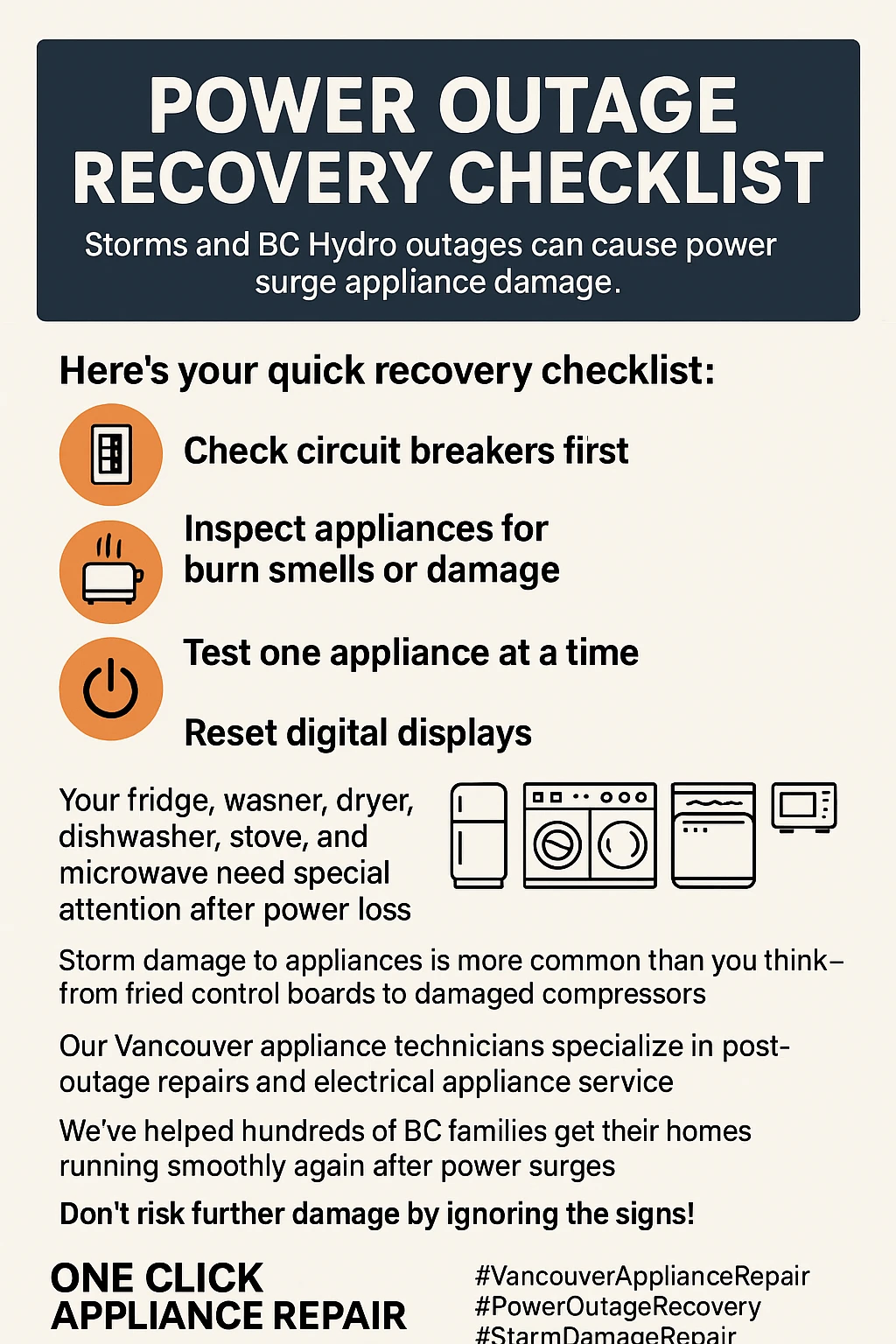
Understanding Vancouver’s Hidden Electrical Crisis
Let’s get real about what we’re actually dealing with in Vancouver when it comes to power outages and appliance protection. Our city faces a perfect storm of electrical challenges that most other Canadian cities simply don’t experience. Between our notorious Pacific Northwest storms, aging infrastructure, and unique coastal environment, Vancouver homeowners are playing electrical roulette every time the weather gets sketchy. The statistics are honestly pretty scary when you start adding up the financial risk sitting in your home right now.
BC Hydro dropped some shocking numbers recently – they reported power outages affecting over 1.4 million customers in 2024, representing nearly three-quarters of all British Columbians. That’s not just an inconvenience statistic; each of these outage events creates perfect conditions for appliance-destroying power surges when electricity gets restored. The region’s worst storms have intensified over the past five years, and climate change is making these weather patterns even more unpredictable across our province. One particularly brutal example happened in North Vancouver, where a single storm event caused $300,000 in appliance damage across just 33 homes when a transformer exploded during restoration.
What most Vancouver homeowners don’t realize is that your house is quietly experiencing approximately 20 power surges every single day, even when everything seems perfectly normal. These aren’t dramatic lightning-strike events – they’re sneaky internal surges that happen every time your dishwasher kicks on, your furnace cycles, or your refrigerator compressor starts up. Think of it like having tiny electrical earthquakes happening in your walls constantly, gradually weakening the delicate electronic components inside all your appliances over months and years. The National Electrical Manufacturers Association has documented that somewhere between 60% to 80% of all power surges are actually generated inside your own home when large appliances cycle on and off.
How Power Outages Create Appliance-Destroying Surge Conditions
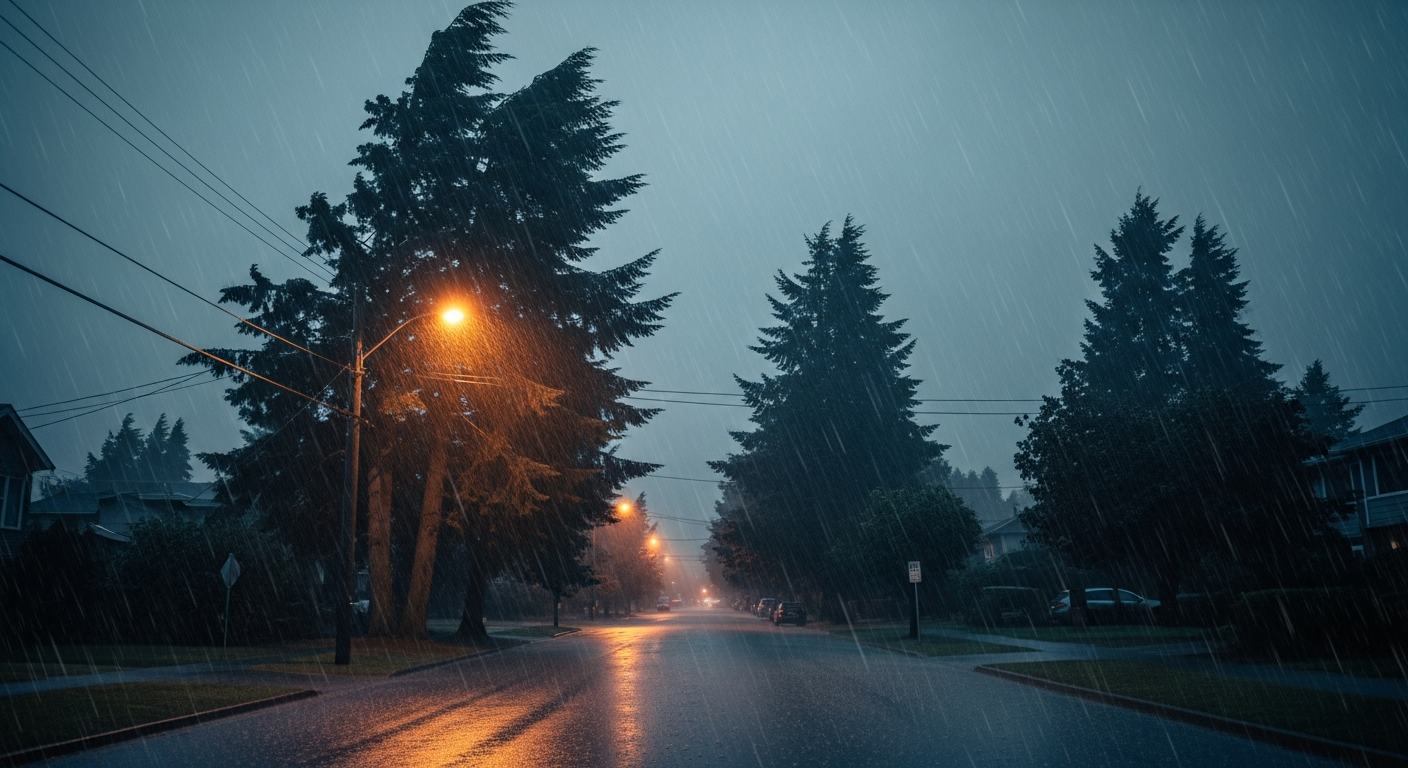
Understanding how power outages transform into appliance-killing electrical events is crucial for protecting your Vancouver home. The damage typically doesn’t occur when the power goes out – it’s when BC Hydro restores electricity that creates the most dangerous conditions for your appliances. This phenomenon, known as restoration surge, happens because utility crews are essentially jumpstarting entire neighborhood electrical grids simultaneously, which can create massive voltage spikes that overwhelm home electrical systems in milliseconds.
The North Vancouver incident that caused $300,000 in damage across 33 homes is a perfect example of how quickly things can go wrong. Residents from Pemberton Heights to Deep Cove reported hearing a loud “boom” or “kaboom” when a transformer exploded during the storm, followed by hours without power. But the real destruction happened when power was restored – that’s when 240-volt power surged through 120-volt lines, randomly destroying appliances throughout the neighborhood. One business owner alone faced $5,000-$6,000 in emergency repairs to keep operating, while homeowners discovered their refrigerators, stoves, microwaves, and coffee makers were permanently fried.
Tree contact with power lines creates particularly unpredictable and dangerous electrical conditions throughout connected areas. When storm winds bring down branches or entire trees onto live electrical lines, the resulting electrical faults can send chaotic voltage spikes racing through the grid before protective systems have time to respond. BC Hydro confirmed that trees contacting power lines caused the North Vancouver transformer damage, demonstrating how natural events can cascade into widespread electrical destruction. What makes surge damage particularly insidious is that it’s often cumulative rather than catastrophic. Unlike lightning strikes that can instantly destroy everything in their path, most surge damage happens gradually through repeated small electrical stresses.
The 24-Hour Post-Outage Safety Protocol That Saves Thousands
The first 24 hours after a power outage are absolutely critical for identifying electrical damage before minor problems become major appliance failures. This window represents your best opportunity to catch surge damage early, potentially saving thousands of dollars in replacement costs and preserving warranty claims. Many homeowners make the mistake of immediately turning everything back on when power returns, but this rushed approach can mask serious damage that only shows up later when it’s too expensive to fix.
Start your post-outage inspection by systematically checking each major appliance for obvious signs of electrical damage in neighborhoods like Kitsilano, Richmond, and Burnaby where power restoration can be particularly unpredictable due to the mix of underground and overhead power lines. Look for burnt smells, unusual noises, error codes that weren’t there before, or complete failure to power on. Pay special attention to appliances with digital displays or electronic controls, as these sophisticated components are particularly vulnerable to surge damage. Document everything you find with photos and notes, including the exact time you discovered each issue – this information becomes crucial for insurance claims and warranty protection.
Don’t immediately assume that appliances appearing to work normally have escaped damage. Many surge-damaged appliances continue operating with compromised internal components, leading to premature failure weeks or months later. Test each appliance thoroughly – run your dishwasher through a complete cycle, check that your refrigerator maintains proper temperatures, and verify that your washing machine completes all functions without error codes. This comprehensive testing approach helps identify hidden damage before it becomes catastrophic failure. BC Hydro specifically recommends that homeowners avoid immediately turning on heating systems and multiple electronics as soon as power returns, giving the electrical grid time to stabilize before adding full load demands.
Smart Appliances: Vancouver’s Hidden Vulnerability Crisis
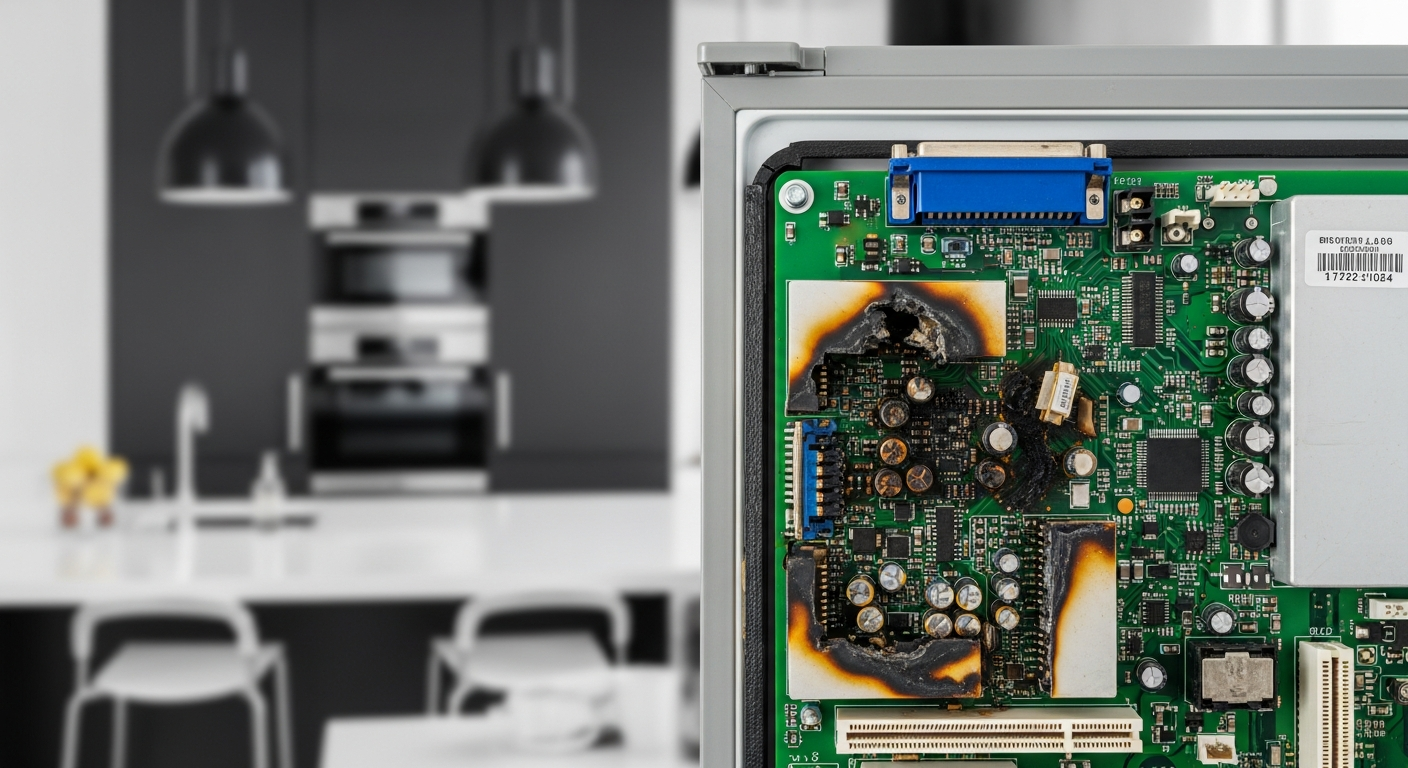
Modern smart appliances represent a massive surge vulnerability that most Vancouver homeowners completely underestimate. Your Wi-Fi-enabled refrigerator, smart washing machine, and connected thermostat are essentially computers disguised as household equipment, packed with sophisticated electronic components that are exponentially more sensitive to electrical fluctuations than the simple motors and heating elements in older appliances. When Vancouver’s aging electrical infrastructure struggles to provide clean, stable power during peak demand or weather events, these smart devices become sitting ducks for voltage spikes.
The problem gets worse when you consider how these smart appliances maintain constant connections to your home network. Electrical surges don’t just travel through power lines – they can also propagate through data cables, ethernet connections, and even Wi-Fi signals under certain conditions. This means that a single electrical event can potentially damage multiple smart devices simultaneously, creating repair bills that quickly escalate into tens of thousands of dollars. Recent surge damage incidents have seen entire home automation systems fail when one compromised device spread electrical damage throughout the connected network.
Smart appliances also tend to fail more catastrophically than traditional appliances when surge damage occurs. An older refrigerator might lose its digital display but continue cooling food, while a smart refrigerator with damaged control circuits often becomes completely non-functional. The replacement costs are staggering – high-end smart refrigerators can cost $5,000 to $8,000 to replace, and the complex digital controls rarely qualify for partial repairs. Most manufacturers require complete component replacement when surge damage affects the integrated circuit boards that control internet connectivity and smart features.
Building Your Surge Protection Fortress
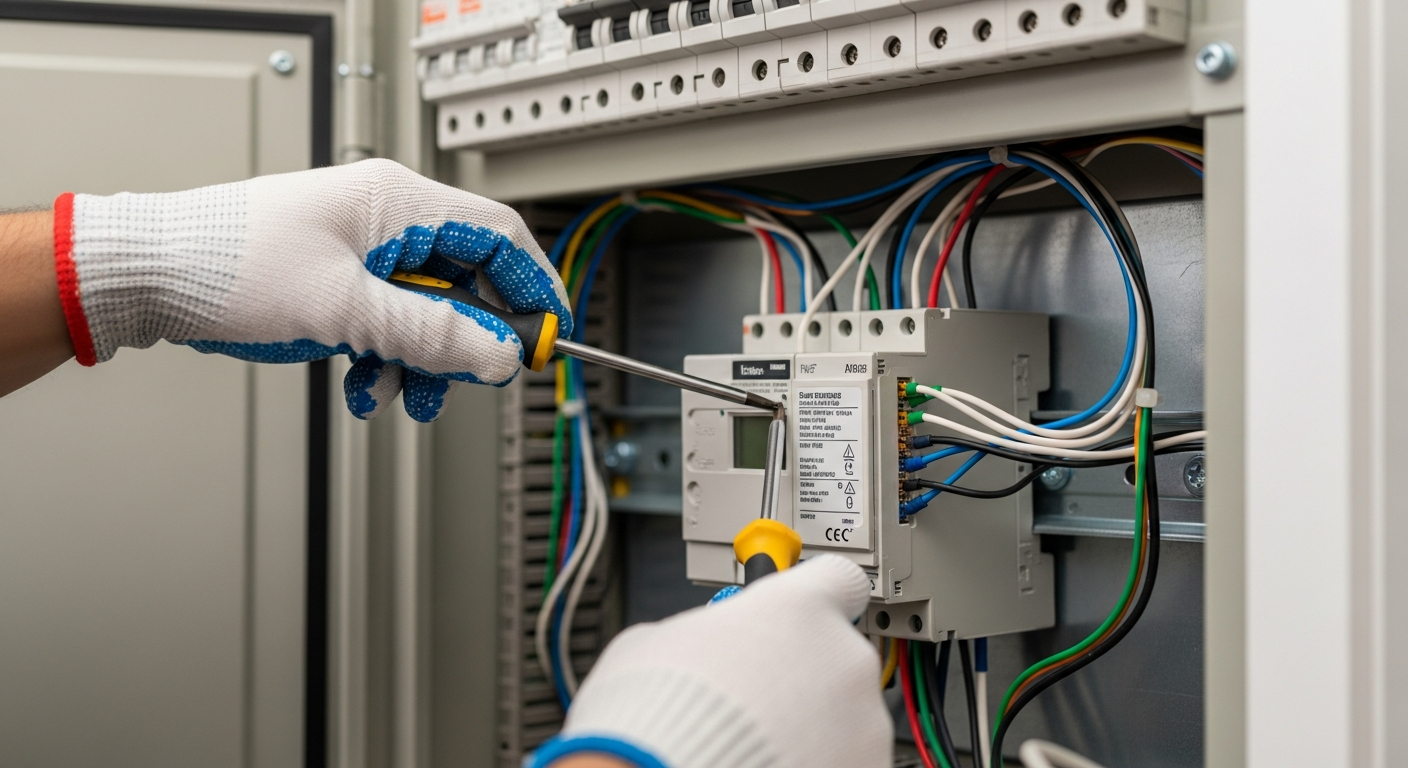
Creating effective surge protection for your Vancouver home requires a layered defense strategy that addresses both external and internal electrical threats. The foundation of any serious protection plan starts with a whole-home surge protector installed directly at your electrical panel by a qualified electrician. These powerful devices create a protective shield around your entire electrical system, intercepting voltage spikes before they can reach any of your outlets or appliances. When properly installed, whole-home protectors can handle even massive surges from direct lightning strikes, providing comprehensive coverage that individual outlet protectors simply cannot match.
Point-of-use surge protectors form your second line of defense, providing targeted protection for high-value electronics and appliances. These familiar power strips and plug-in devices excel at catching smaller voltage spikes that might slip past your whole-home protection, and they’re essential for creating redundant safety layers. Look for models with high joule ratings – this indicates their capacity to absorb electrical energy – and low clamping voltages, meaning they respond quickly when surges occur. Quality point-of-use protectors should include warranty coverage for connected equipment, demonstrating the manufacturer’s confidence in their effectiveness.
Vancouver’s coastal environment creates unique challenges that require special consideration in your protection strategy. Salt air from our proximity to the Pacific Ocean gradually corrodes electrical connections throughout your home’s wiring system, making surge protectors less effective over time. Professional electrical inspections should be part of your regular home maintenance routine, helping identify corroded components before they compromise your surge protection effectiveness. Replace surge protectors every 3-5 years in coastal environments, as the harsh conditions accelerate component degradation beyond normal wear patterns. Uninterruptible Power Supply systems, or UPS devices, deserve special mention because they protect against both surges and outages, making them particularly valuable for home offices and expensive electronics in tech-heavy neighborhoods like Yaletown.
Frequently Asked Questions
How can I tell if my appliances were damaged by a power surge?
Common signs of surge damage include appliances that won’t turn on, display error codes that weren’t there before, produce burning smells, or operate erratically with unusual noises or performance issues. Digital displays that flicker, appliances that reset themselves randomly, or equipment that appears to work but doesn’t maintain proper temperatures or complete cycles properly are all red flags indicating potential surge damage.
Will my homeowner’s insurance cover power surge damage to appliances?
Most standard homeowner insurance policies exclude power surge damage unless you have specific equipment breakdown coverage or electrical surge endorsements. Many Vancouver residents discover this exclusion too late, when filing claims after storm damage. Contact your insurance agent to verify your coverage and consider adding electrical equipment protection if it’s not already included in your policy.
Are whole-home surge protectors worth the investment for Vancouver homes?
Absolutely, especially given Vancouver’s frequent storm activity and aging electrical infrastructure. Whole-home surge protectors typically cost $300-500 installed and can protect $15,000+ worth of appliances and electronics. With BC Hydro reporting record outage levels and climate change intensifying storm patterns, the protection becomes even more valuable. A single major surge event can easily cause damage exceeding the cost of comprehensive protection.
How often should I replace surge protectors in Vancouver’s coastal climate?
Vancouver’s salt air and high humidity accelerate surge protector degradation, requiring replacement every 3-5 years rather than the typical 5-7 year lifespan in drier climates. Point-of-use protectors may need more frequent replacement if they’re exposed to moisture or temperature fluctuations. Many modern protectors include indicator lights showing when replacement is needed, taking the guesswork out of maintenance timing.
Wrapping Up
Vancouver’s unique combination of severe weather, aging infrastructure, and smart appliance vulnerability creates a perfect storm for costly surge damage that most homeowners aren’t prepared to handle. With BC Hydro’s record outage levels and increasingly intense storm patterns, protecting your appliances isn’t just smart – it’s financially essential. The 24-hour post-outage inspection window can mean the difference between minor repairs and total appliance replacement, while comprehensive surge protection provides the peace of mind that your investment in modern appliances won’t disappear in the next electrical disaster.
When surge damage does occur, don’t let electrical problems turn into expensive disasters. One Click Appliance Repair specializes in diagnosing and repairing surge-damaged appliances throughout Vancouver, helping homeowners in Kitsilano, Richmond, Burnaby, and beyond get their kitchens and homes back to normal quickly and affordably. Our experienced technicians understand the unique challenges that coastal electrical conditions create and can help you implement protection strategies to prevent future damage while restoring your appliances to full functionality.